NIOS Biology 314 — PE PYQ Bank (full answers)
L2 L3 L5 L7 L10 L11 L12 L15 L17 L19 L21 L22 L23 L25 L28 L30 L31
L2 — The Kingdoms Monera, Protoctista and Fungi 3
Q1. Draw a neat and labelled diagram of a mushroom
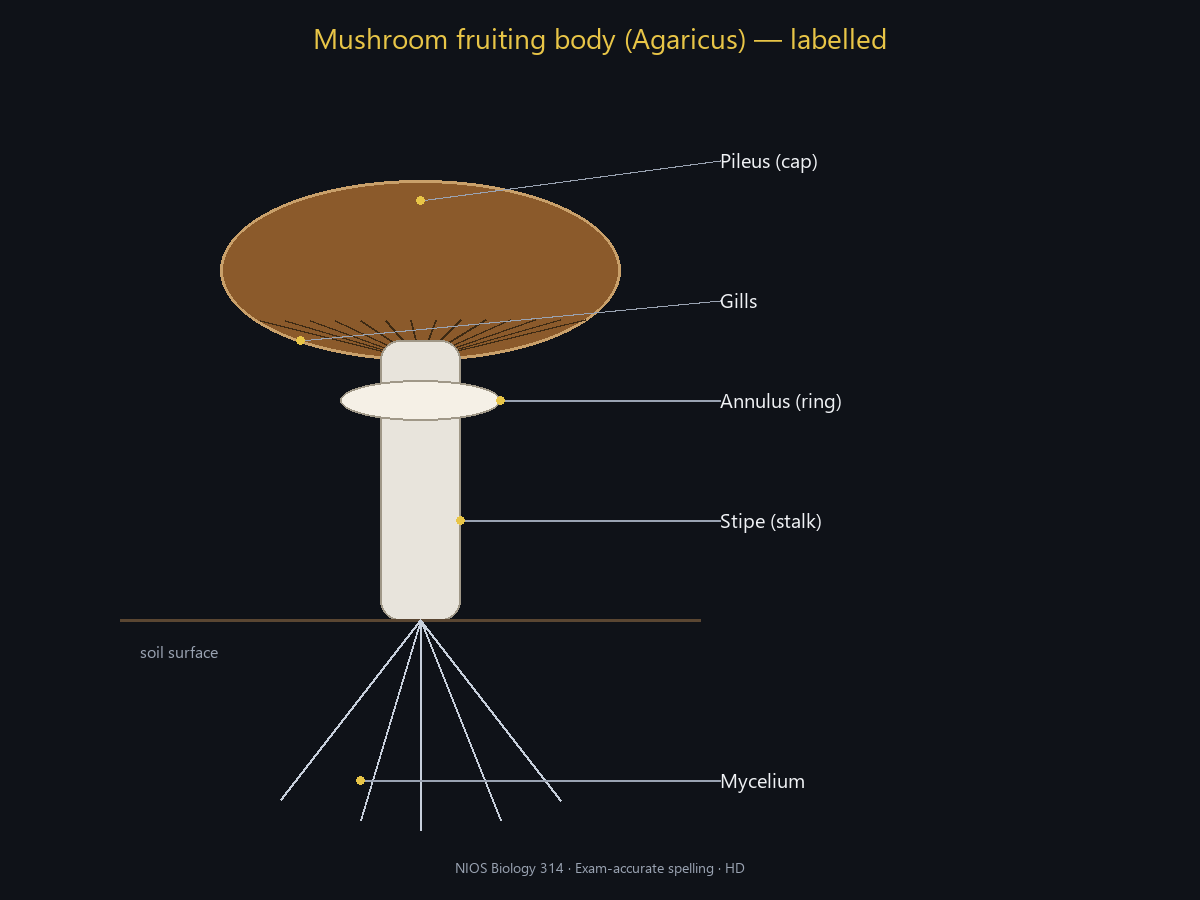
Why it clicks: Mushroom is the fruiting body of a basidiomycete fungus (Kingdom Fungi). Marks go to neat labels of cap, stalk, gills and underground mycelium.
Q2. What are the four nutritional categories found in bacteria?
Why it clicks: Bacteria span all four modes—unlike animals which are only chemoheterotrophs. Exam often lists these four names.
Q3. Why cyanobacteria is included in Monera?
Why it clicks: Photosynthesis alone does not make a plant—prokaryotic cell organisation decides Monera.
L3 — Kingdoms Plantae and Animalia 7
Q1. What does the following sequence represent? Blue-green algae → Crustose lichens → Foliose lichens Dicotyledonous trees ← Shrubs ← Mosses
Why it clicks: Pioneer community (blue-green algae/lichens) → mosses → shrubs → trees is primary succession on bare substrate.
Q2. Cephalothorax is a characteristic feature present in the phylum
Why it clicks: Cephalothorax = fused head + thorax, classic of many arthropods (e.g. prawn, spider).
Q3. Which of the following is an example of an oviparous mammal?
Why it clicks: Monotreme mammal that lays eggs (oviparous). Kangaroo/whale/bat are viviparous.
Q4. How will you distinguish between the vascular bundles of a dicot root and a dicot stem?
Why it clicks: Compare arrangement (radial vs ring) and presence of cambium/pith—high-yield anatomy difference.
Q5. Which one of the following represent the gametophyte of fern?
Why it clicks: Fern gametophyte is the small green heart-shaped prothallus. Frond/sorus belong to sporophyte.
Q6. Maize is a monocot plant. Give any two valid reasons for considering of so. m
Why it clicks: Monocot checklist + habitat = biotic + abiotic; migration changes N by adding/removing individuals.
Q7. Draw a neat labelled diagram of a V.S. of a monocot leaf and label the following parts: a) xylem b) phloem c) Bundle sheath d) Bulliform cells e) Mesophyll tissue f) Vascular bundle
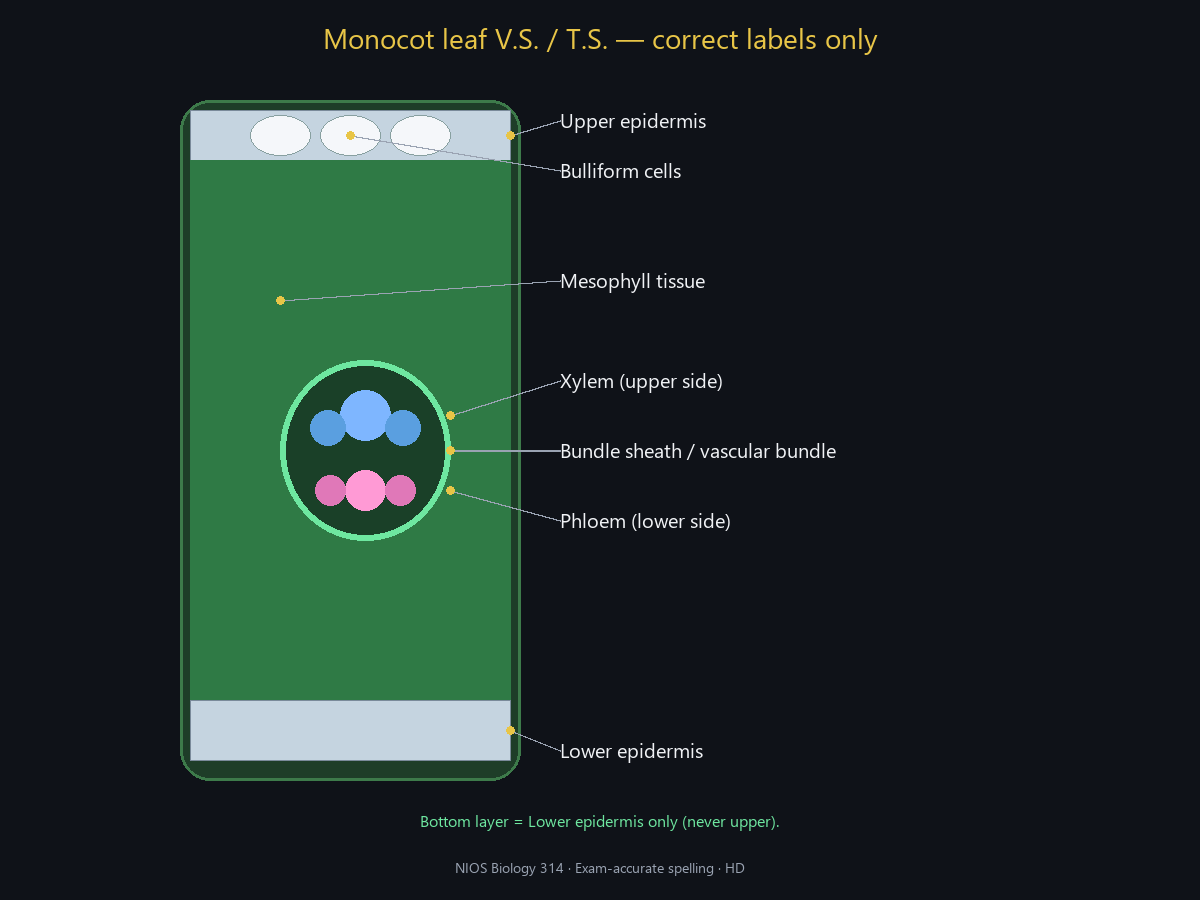
Why it clicks: Bulliform cells and bundle sheath are hallmark monocot/grass leaf labels.
L5 — Tissues and Other Levels of Organization 9
Q1. What are meristems? Write the location of the following meristems in the plant: 2 (a) Apical meristem (b) Lateral meristem
Why it clicks: Apical = length; lateral = girth.
Q2. What are the main functions of the muscular tissue? Where are the following muscles located? (a) Striated muscles (b) Unstriated muscles
Why it clicks: Striated = voluntary skeletal; smooth = involuntary organs.
Q3. (a) What types of roots are found in plants growing in marshy areas? (b) Write the name of the tissue present in the aerial roots of epiphytes, which help in the absorption of moisture from the atmosphere. 2 (H) Am y
Why it clicks: Pneumatophores = snorkels; velamen = moisture sponge on orchids etc.
Q4. Which one of the following is the living part of xylem?
Why it clicks: Tracheids, vessels, fibres are dead at maturity; only xylem parenchyma remains living.
Q5. (II) Why is parenchyma not a complex tissue? Because it has A. thin walls B. one type of cells only C. single nuclei D. no thickenings
Why it clicks: Simple tissue = one cell type (parenchyma). Complex tissue (xylem/phloem) = several cell types.
Q6. Identify the two wrong statements about meristematic tissue in plants i. Cells are arranged with intercellular spaces ii. Round, oval or polygonal thin walled living cells iii. Every cell with lot of cytoplasm and prominent nucleus iv. Every cell with larger prominent vacuoles
Why it clicks: Meristem = packed, dense cytoplasm, small vacuoles—not large empty vacuoles or big spaces.
Q7. Fill in the blanks: (Attempt any two parts from following questions (i) The 'brush border' in the lining of intestine is its epithelial lining made up of……. (ii) A slide showed differentiated cells of……….. Plant tissue of which were all structurally similar. (iii) Both bacteria and amoeba are able to divide into two by the method of ……… (iv) muscle fibre once if begins to contract does not stop contracting and relaxing all its life
Why it clicks: Brush border = absorptive gut epithelium; cardiac = lifelong beat.
Q8. Write the phylum of each one of the following organisms belongs to.: (a) Earthworm (b) Shark (c) Starfish (d) Spider Give the technical terms for the following: (i) Plant tissue having singular cell (ii) Plant tissues which do not divide anymore
Why it clicks: Phylum labels + simple vs permanent tissue definitions.
Q9. Iodized salt; sea food; fish green leafy vegetable in diet 29 Earthworm -Annelida Star fish-Platyhelmenthis Shark- Chordata Spider Arthropoda 30 (i) Simple Tissues (ii) Parenchymatous tissues 31 Blue-green algae or Cyanobacteria are photosynthetic bacteria but they are placed under kingdom Monera because they are unicellular, they show prokaryotic features like lack of a well defined nucleus
Why it clicks: Use as revision of mixed PE facts; starfish is echinoderm, not flatworm.
L7 — Shoot System 2
Q1. Observe the diagrams given below and assign the correct name from the li st supplied. (Attempt any two parts from A-D) (Rhizome, Tuber, Corm, Bulb) 10 ]
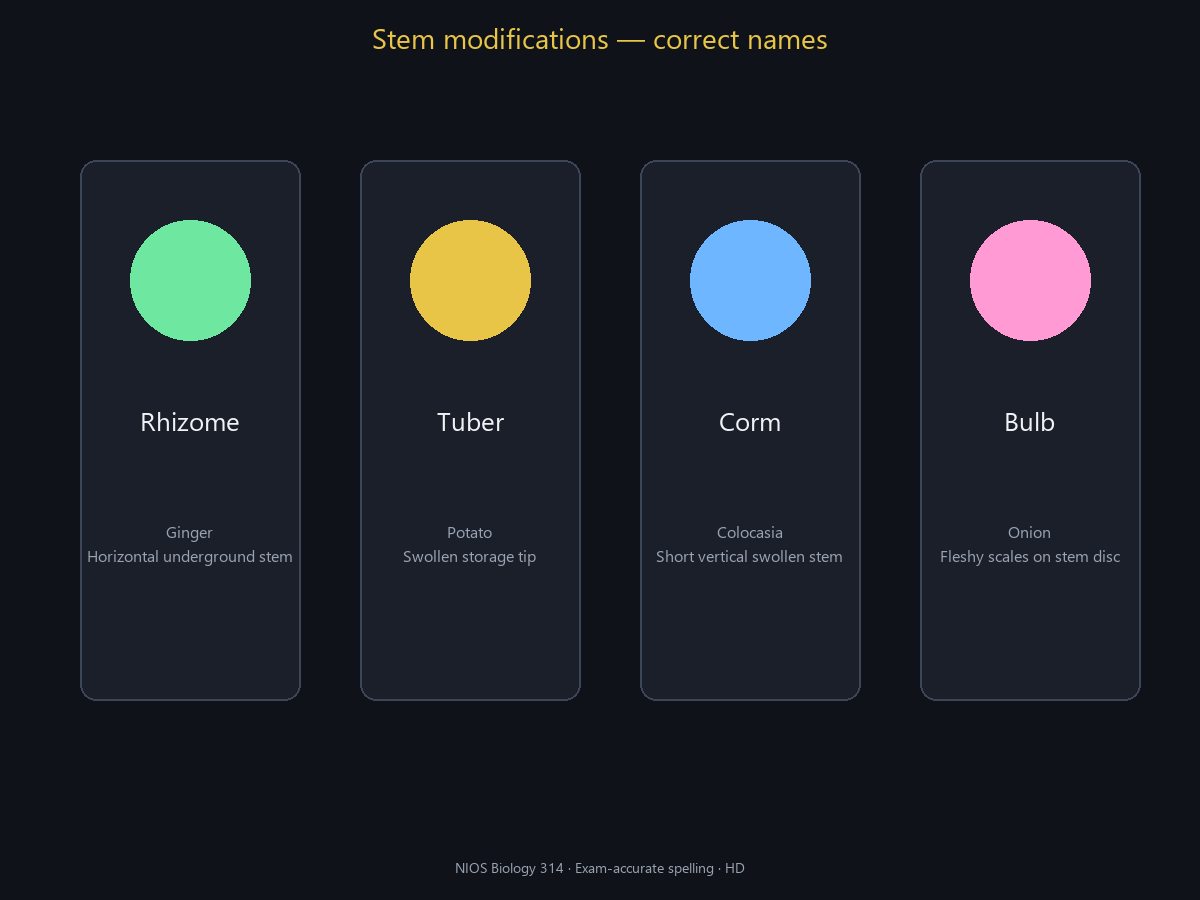
Why it clicks: All four are stem modifications for storage/perennation—not roots.
Q2. The leaf of a plant is an example of A. a particular type of tissue B. an organ C. can organ system D. cell level of organization
Why it clicks: Leaf = organ (several tissues: epidermis, mesophyll, vascular). Not a single tissue or whole organ system.
L10 — Nitrogen Metabolism 3
Q1. The special protein present in the root nodules of legume which helps in nitrogen fixation is
Why it clicks: Pink O₂-buffer protein in nodules; protects nitrogenase while allowing respiration.
Q2. The bacteria that help in the fixation of atmospheric nitrogen
Why it clicks: Symbiotic N₂ fixer in legume root nodules. Lactobacillus = dairy; Salmonella = pathogen.
Q3. (b) Name the two proteins found in root nodules and helps in nitrogen fix ation. 14 ]
Why it clicks: Two proteins: enzyme + oxygen shield.
L11 — Photosynthesis 8
Q1. In C4 plants, the initial acceptor of CO2 is
Why it clicks: C4 first acceptor in mesophyll is PEP → OAA (4-C). RuBP is C3/Calvin acceptor.
Q2. Match Column-I with the functions given in Column-II. 2 Column-I Column-II (i) Pneumatophores (a) Roots with chlorophyll and manufacture food (ii) Haustoria (b) Roots developing from nodes and provide anchorage (c) Roots which grow vertically up in the air and help in respiration (d) Roots which penetrate the host plant and suck food from host
Why it clicks: Match root modification to job: breathing vs parasitic suction.
Q3. Photosynthesis occurs in green parts of the plants mostly the leaves which have chloroplasts. The thylakoids of chloroplast contain pigments which absorb l ight of different wavelengths and carry out the photochemical reactions. These pigments are packed into functional clusters called photosystems-PS-I and PS-II. (a) Name the pigments that constitute the photosystems. (b) What is the function of Photosystems?
Why it clicks: PS = functional pigment clusters on thylakoid membranes.
Q4. (II) Distinguish between C3 and C4 plants with reference to the following characteristics. Features C3 Plants C4 Plants (a) Carbon di-oxide acceptor (b) Carbon di-oxide fixing enzymes (c) First product of photosynthesis A
Why it clicks: C4 is a CO₂ pump; first stable product is four-carbon.
Q5. (a) What is Chemosynthesis? Write any four differences between chemosynthes is and photosynthesis
Why it clicks: Same goal (organic carbon), different energy battery.
Q6. Match column -I statement with the right option of column II 2 a) Phylloclade b) Tuber i. Protection ii. Reproduction iii. Storage iv. Photosynthesis
Why it clicks: Phylloclade photosynthesises; tuber stores food.
Q7. (I) With the help of a diagram only explain the Calvin cycle?
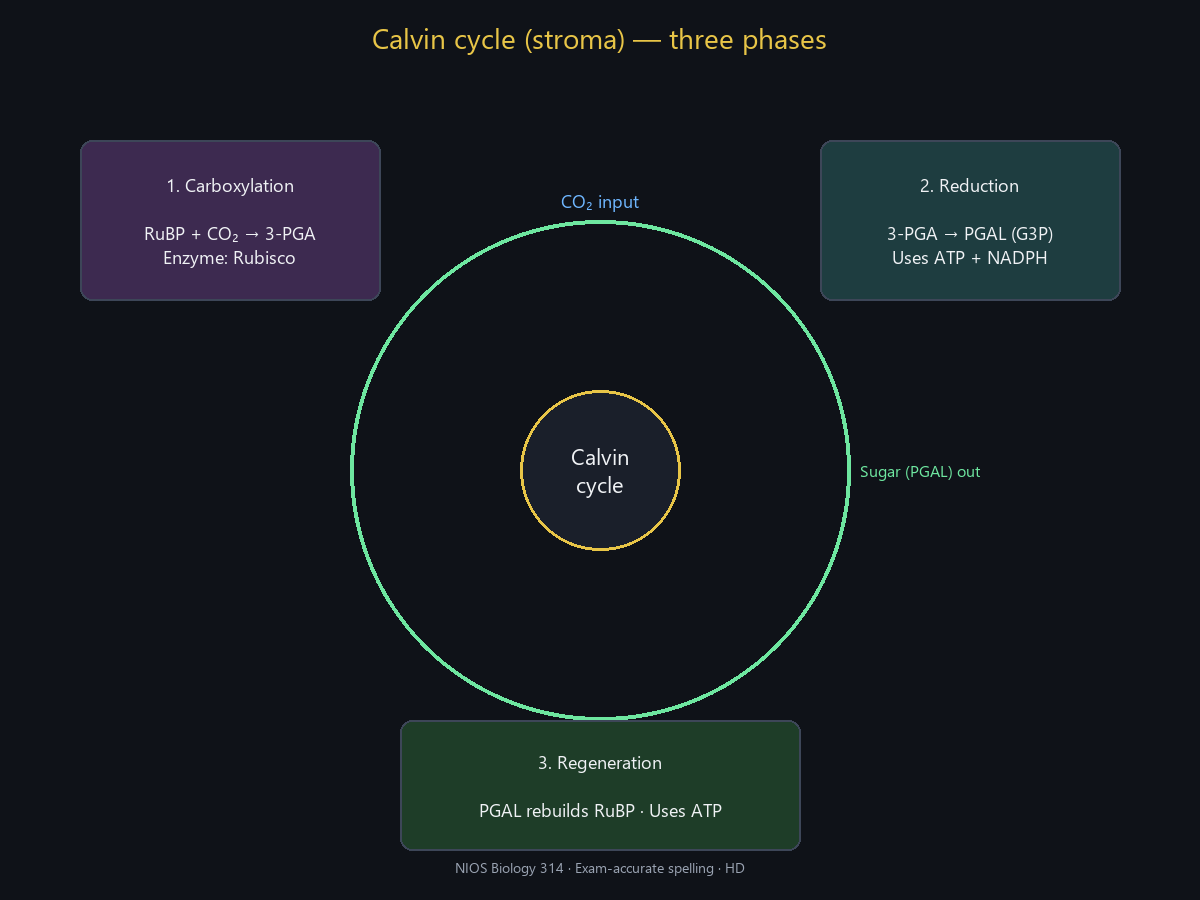
Why it clicks: Three gears: fix CO₂, reduce, rebuild RuBP.
Q8. i. In photosynthesis, there are two reactions light and dark reaction why are they called so? explain ii. What are the products obtained in each reaction? iii. What are P 680 and P700?
Why it clicks: P numbers = wavelength of maximum absorption of the reaction-centre chlorophyll.
L12 — Respiration in Plants 1
Q1. (I) Illustrate the 3 major phases in glycolysis
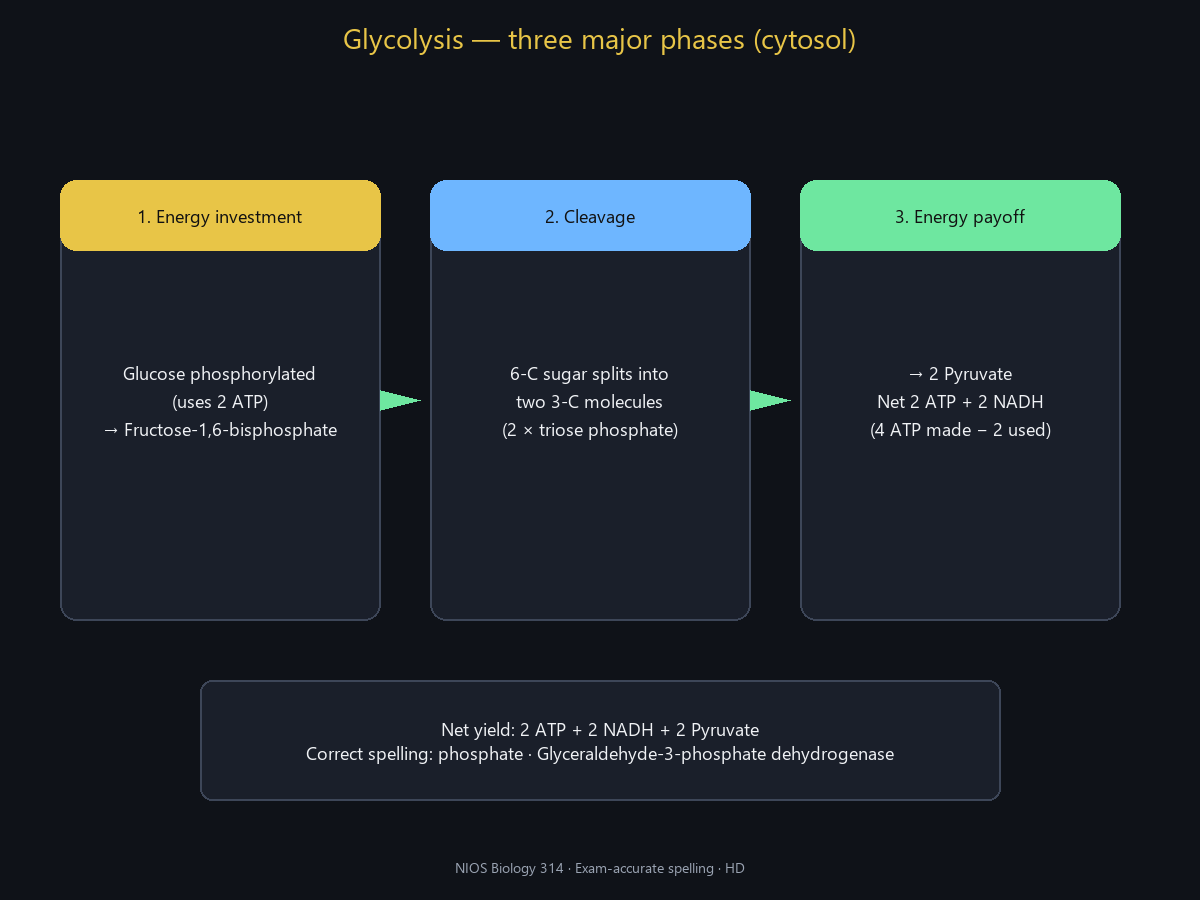
Why it clicks: Pay 2 ATP early, gain 4 later → net 2 ATP per glucose.
L15 — Circulation of Body Fluids 3
Q1. Heart is three-chambered in reptiles. But a partially divided ventricle (i.e., four-chambered heart) is present in
Why it clicks: Crocodiles have a four-chambered heart; most other reptiles are three-chambered.
Q2. (a) Write the differences between blood and lymph. (b) With the help of flowchart, only show the route of blood flow and lymph flow in the human body. 3 (H) a
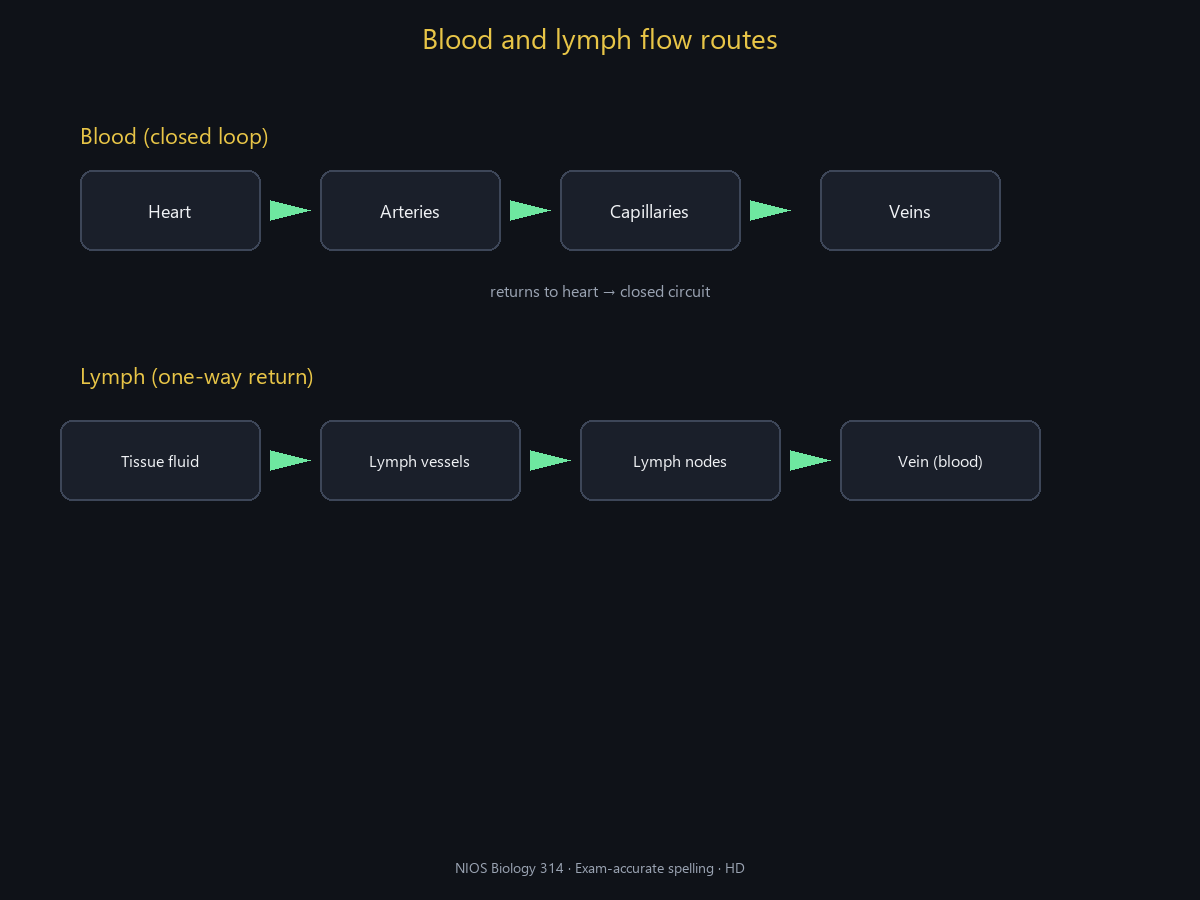
Why it clicks: Lymph is one-way return of fluid the blood leaked; blood is a closed loop.
Q3. The blood protein that provides factors for clotting is
Why it clicks: Plasma protein converted to fibrin mesh in a clot. Thrombin is the enzyme, not the main clot protein store.
L17 — Coordination and Control – Nervous and Endocrine Systems 9
Q1. The condition caused due to oversecretion of thyroxine is
Why it clicks: Excess thyroxine = hyperthyroidism. Cretinism/myxoedema = underactivity patterns.
Q2. Complete the flowchart with the basic components of the nervous system (attempt any two from A to D): 2V
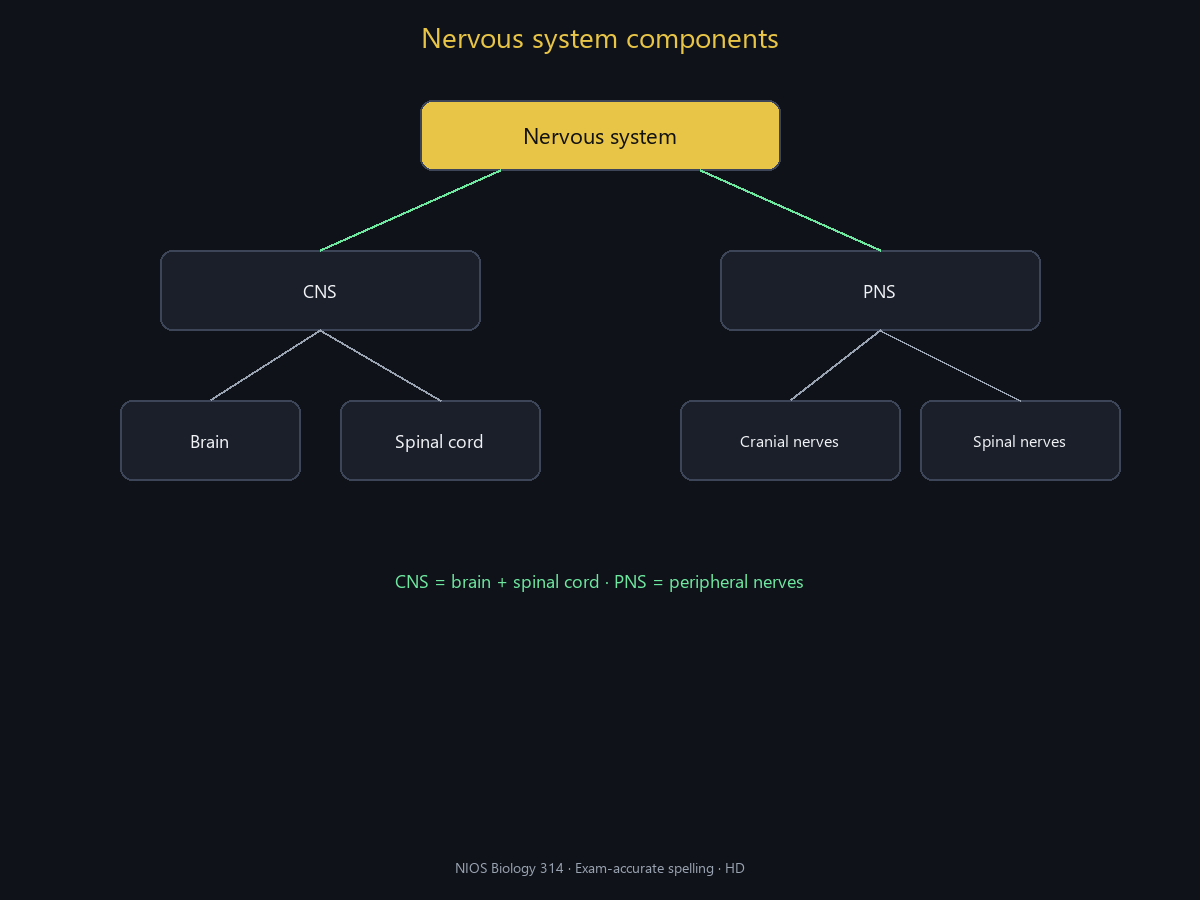
Why it clicks: Fill any two blanks with CNS/PNS or brain/spinal cord/nerves as per flowchart.
Q3. Which one of the following is not produced due to under secretion of thyroxine?
Why it clicks: Hypo → cretinism/myxoedema; goitre often iodine deficiency story.
Q4. Identify the type of neuron given in the diagram and state the function of axon: 2 15 ]
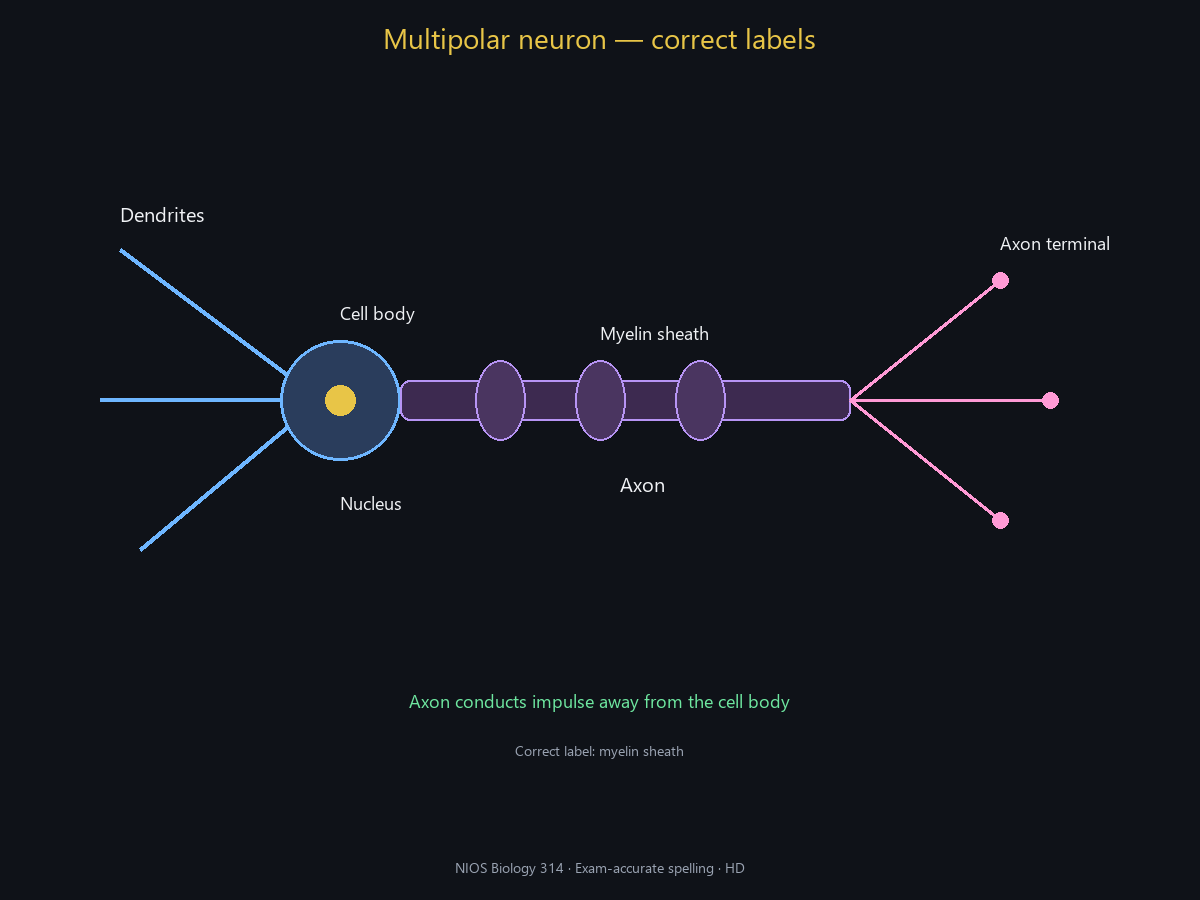
Why it clicks: Dendrites receive; axon sends out.
Q5. (I) The faulty functioning of an endocrine gland can make a person very short or very tall. This gland is: A. pituitary B. adrenal C. pineal D. thyroid
Why it clicks: Growth hormone (STH/GH) from anterior pituitary: excess → tall/gigantism; deficit → short/dwarfism.
Q6. Match the hormones in column I with their functions given in column II. (i) Column I Column II (i) Testosterone (ii) Insulin (a) Causes breasts to develop in females (b) Regulates the amount of sugar is blood (c) Causes males to start producing sperms (d) Prepares body for as emergency 20 In the flow chart given below write down the basic components of the nervous system in the empty spaces, a, b, c, and d.(attempt any two a
Why it clicks: Match hormone to textbook action.
Q7. (b) Suppose you are stuck in traffic and have the feeling of urination. Which part of the nervous system do you think is responsible for this? Mention the role of that part
Why it clicks: Not skeletal (somatic) control alone—visceral ANS pathway.
Q8. Following is the list of hormones produced in our body. Write their expanded forms and write the names of the endocrine glands that produce them: (a) STH (b) TSH (c) FSH (e) ADH Marking Scheme (.no MCQs Marks
Why it clicks: Tropic hormones of anterior pituitary vs ADH from posterior pituitary.
Q9. ADH (Antidiuretic hormone) is released by the posterior pituitary gland and is a non- tropic hormone. TSH (thyroid-stimulating hormone), and FSH(follicle-stimulating hormone) are released by the anterior pituitary gland and are tropic hormones. STH: Somatotropic Hormone LH: Luteinizing Hormone
Why it clicks: Marking-scheme style facts already in stem—use as model answer.
L19 — Reproduction in Plants 13
Q1. When both male and female flowers are present on the same plant, the plant is said to be
Why it clicks: Both male and female flowers on same plant = monoecious. Dioecious = sexes on different plants.
Q2. The edible part of the coconut is
Why it clicks: Coconut water and white kernel are endosperm (food tissue of seed).
Q3. The example of hypanthodium is
Why it clicks: Hypanthodium = fig-type closed receptacle; example peepal/fig.
Q4. Identify the type of inflorescence of the diagram given below:
Why it clicks: Without the figure, name the type your paper diagram shows using NIOS inflorescence list.
Q5. What do you understand by the term 'double fertilization'? Briefly explain the process and the end products formed. 3 "Xmoham
Why it clicks: Two fusions, two products—unique to flowering plants.
Q6. Name the following: 2 (i) Excretory organs of earthworm (ii) Naked seeds are the characteristic feature of this group of plants 9 ]
Why it clicks: Annelid excretion + gymnosperm key character.
Q7. Supply the technical term for the following: 2 (a) Division of other cells in embryo sac like synergids or antipodal cel ls to give rise to additional embryos. (b) The process in which the zygote may divide to give rise to two or more cell s each of which develops into a separate embryo
Why it clicks: Extra embryos without normal single zygote path = polyembryony types.
Q8. (b) What is the function of Endosperm in the flowering plants? Write th e names of any 2 types of endosperms
Why it clicks: Endosperm = baby plants lunch box; classified by how free nuclei/walls form.
Q9. (II) Which one of the following helps in maintaining posture and balance of the human body? A. medulla B. cerebellum C. cerebrum D. Pons 4 (I) A pollen grain in its external view is drawn here. The substance which is the chief component of its external layer A. cellulose B. pectin C. protein D. sporo-pollonin
Why it clicks: Cerebellum = balance; sporopollenin = tough pollen coat.
Q10. (II) Developing pollen grains in an anther are nourished by A. Epidermal cells/ outermost layer B. Middle layer C. Inner most layer, tapetum D. Micro spore mother cells
Why it clicks: Tapetum nourishes developing pollen grains inside anther.
Q11. (II) The mode of reproduction in Chlamydomonas where the gametes are morphologically identical but differ physiologically or chemically: A. Oogamy; B. Ani sogamy C. Syngamy D. Isogamy 9 (I) Leydig cells in the human testes secrete produce A. Seminal fluid B. Testosterone C. Sperms D. a white, vis cons, alkaline secretion
Why it clicks: For morphologically identical gametes pick Isogamy; Leydig = testosterone.
Q12. "Angiosperms are either Monocots or Dicots". State any four differences between them
Why it clicks: Classic monocot–dicot comparison table.
Q13. With the help of a neat labelled diagram explain Hypanthodium inflorescence, Give an example of it
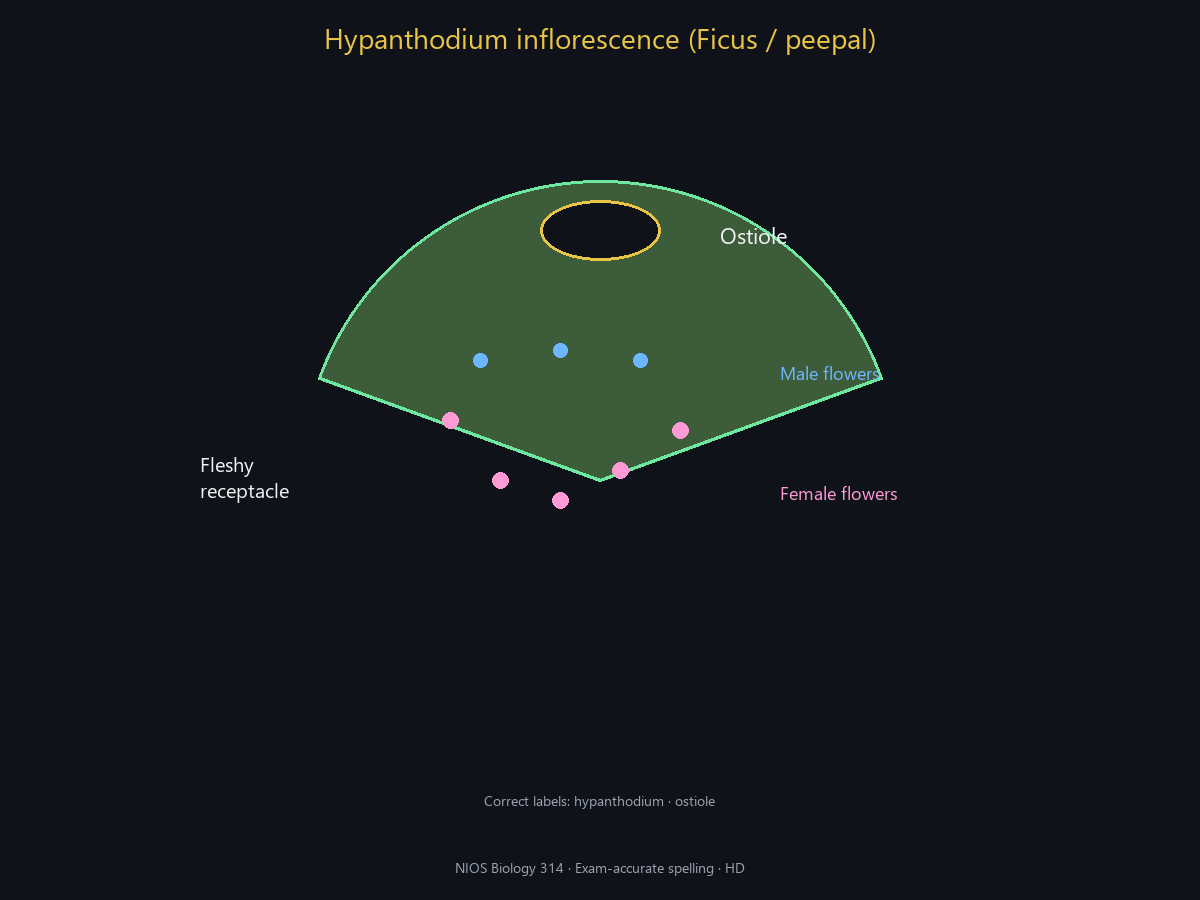
Why it clicks: Closed urn with a door = hypanthodium.
L21 — Reproduction and Population Control 11
Q1. Name of the technique used for detecting genetic disorders in a foetus is
Why it clicks: Amniotic fluid sampling detects foetal chromosomal/genetic disorders.
Q2. Match the statement given in Column-I with the right option in Column-II: 2 Column-I Column-II (i) Copper-T (a) Interfere with the ovulation process and prevent fertilization (ii) Condoms (b) Prevent sperms from meeting the ovulated egg (c) Implantation is not possible (d) Permanently prevent fertilization
Why it clicks: Barrier vs IUD vs hormonal vs permanent—match mode of action.
Q3. Write the name of one contraception carried on in human females. Describe the procedure adopted for it. m ('mZd 'mXm)
Why it clicks: Tubectomy = female sterilisation; demography = population statistics.
Q4. Write three effects of uncontrolled population growth on a nation
Why it clicks: Social/economic strain from rapid growth is the L21 focus.
Q5. Complete the following flow chart from A-D (Attempt any two parts from (A-D)) Sperms are deposited into the female reproductive tract and eggs released from "A" → union of sperm and ovum in "B" →to form a zygote. →zygote divides rapidly to form a spherical mass →"C" →Early embryonic stage called blastocyst get implanted into D
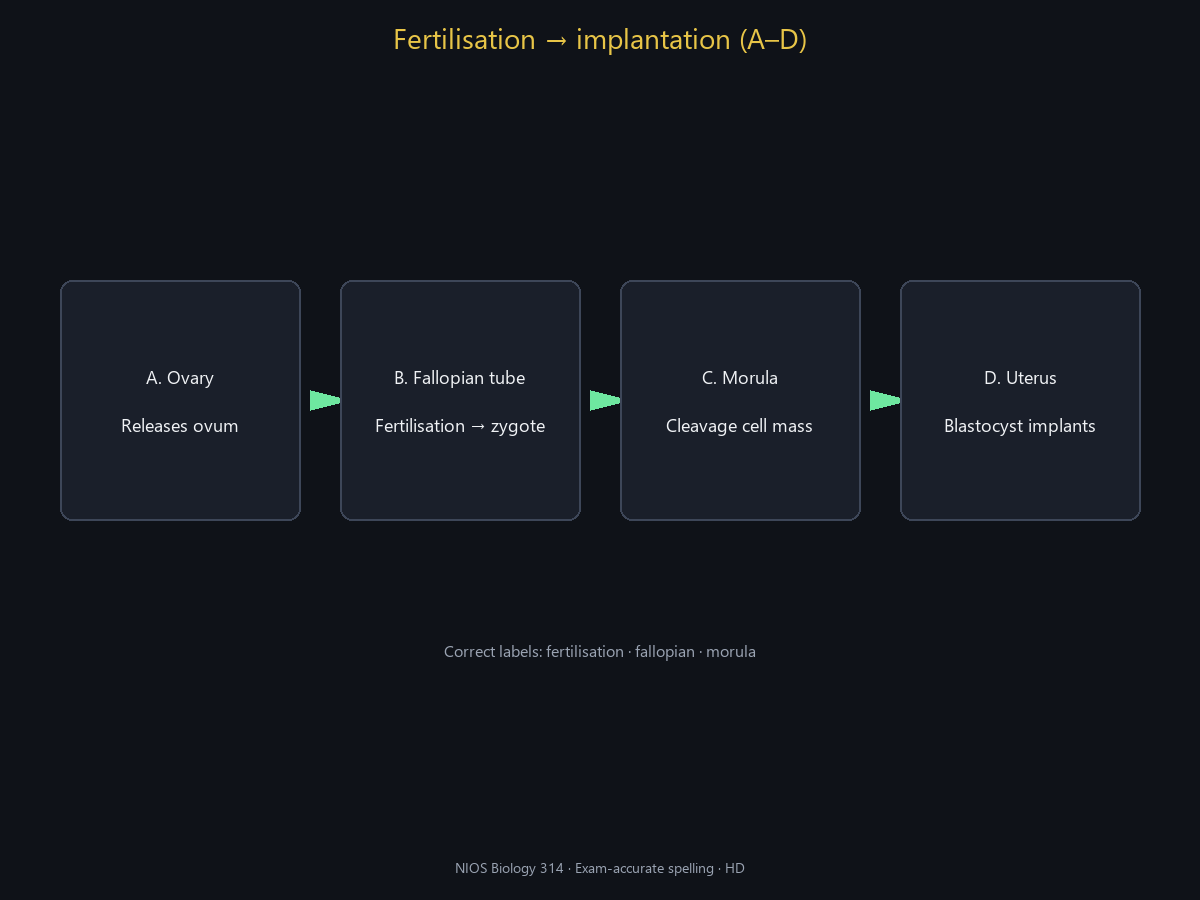
Why it clicks: Egg from ovary → meet sperm in tube → morula → implant in uterus.
Q6. Label the Given below structure of a human sperm and i. Mitochondria ii. Acrosome
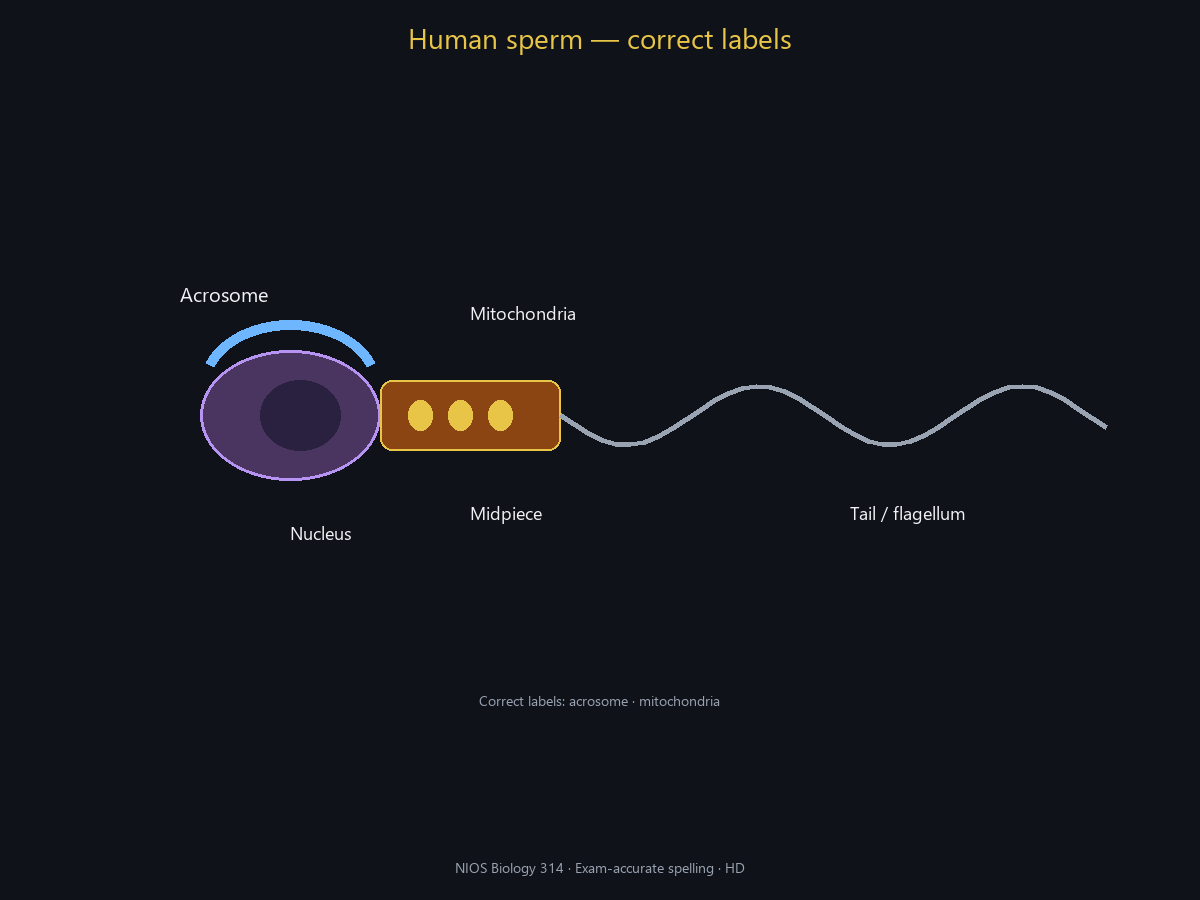
Why it clicks: Drill, fuel tank, propeller.
Q7. Which are the two factors according to you that justify the need for family planning in our country?
Why it clicks: Family planning = health + resources + informed choice.
Q8. Under what conditions do populations become J shaped and S Shaped
Why it clicks: Plenty → J; limited → S.
Q9. (I)State non surgical method of contraception. Mention the name of the procedures
Why it clicks: Non-surgical = reversible methods without cutting tubes.
Q10. (I) Indian population is about to reach a stage of explosion. State any three reasons which may have contributed to such a situation
Why it clicks: Births high + deaths low → explosion risk.
Q11. 36 Populations become J shaped when food is available in plenty, Populations become S Shaped when food becomes limited 37 (I) Vestibule
Why it clicks: Same rule as above—marking key.
L22 — Principles of Genetics 6
Q1. A cross between the F1 progeny and the homozygous recessive parent is known as
Why it clicks: F1 × homozygous recessive = test cross to reveal genotype.
Q2. The phenotypic ratio, in case of incomplete dominance in Mirabilis jalapa, is
Why it clicks: Incomplete dominance (Mirabilis): red : pink : white = 1 : 2 : 1.
Q3. A cross was made between a tall pea plant with red flowers (TTRR) and a dwarf pea plant with white flowers (ttrr). Work out the cross up to F2 generation. Write the phenotypic ratio of F2 generation. 3 b o
Why it clicks: Classic Mendel dihybrid 9:3:3:1.
Q4. Read the following passage and fill in the blanks with appropriat e words. 2 (Attempt any two parts A-D) Criss Cross inheritance in humans A.and B.are examples of sex-linked inheritance in humans. The defective gene is located on C. chromosome. Thus a single defective gene causes disease in males while two defective genes (D. condition) only can cause the disease in females. 12 ]
Why it clicks: X-linked: males express with one copy; females need two.
Q5. (b) A tall pea plant with red flowers (TTRR) is crossed with white dwarf plants (ttrr). Work out the phenotypic ratio in F2 for this cross. (b) U U c (TTRR) c (ttrr) U
Why it clicks: TTRR × ttrr → F1 TtRr → F2 9:3:3:1.
Q6. (II) Haemophilia is a sex linked disease in human beings. A carrier female has married a normal male. Show the genotype of both the individuals. What will be the phenotype of their progeny both daughter and son, with regard to the disease?
Why it clicks: Criss-cross: sons get mothers X.
L23 — Molecular Inheritance and Gene Expression 7
Q1. Pick the odd one out
Why it clicks: RNA uses U not T; stop vs start is the usual trap.
Q2. Match the items in Column-I with the suitable items in Column-II: 2 Column-I Column-II (a) Stilt root (i) Turnip (b) Fusiform root (ii) Banyan (iii) Sugarcane (iv) Radish
Why it clicks: Match root modification to example plant.
Q3. The formation of RNA from DNA is known as
Why it clicks: DNA → RNA = transcription. RNA → protein = translation.
Q4. Observe the given diagram and answer the questions that follow: 2 (a) In which direction does the enzyme DNA polymerase catalyses DNA replic ation (b) Which enzymes joins the Okazaki fragments to form a complete DNA str and. (a)
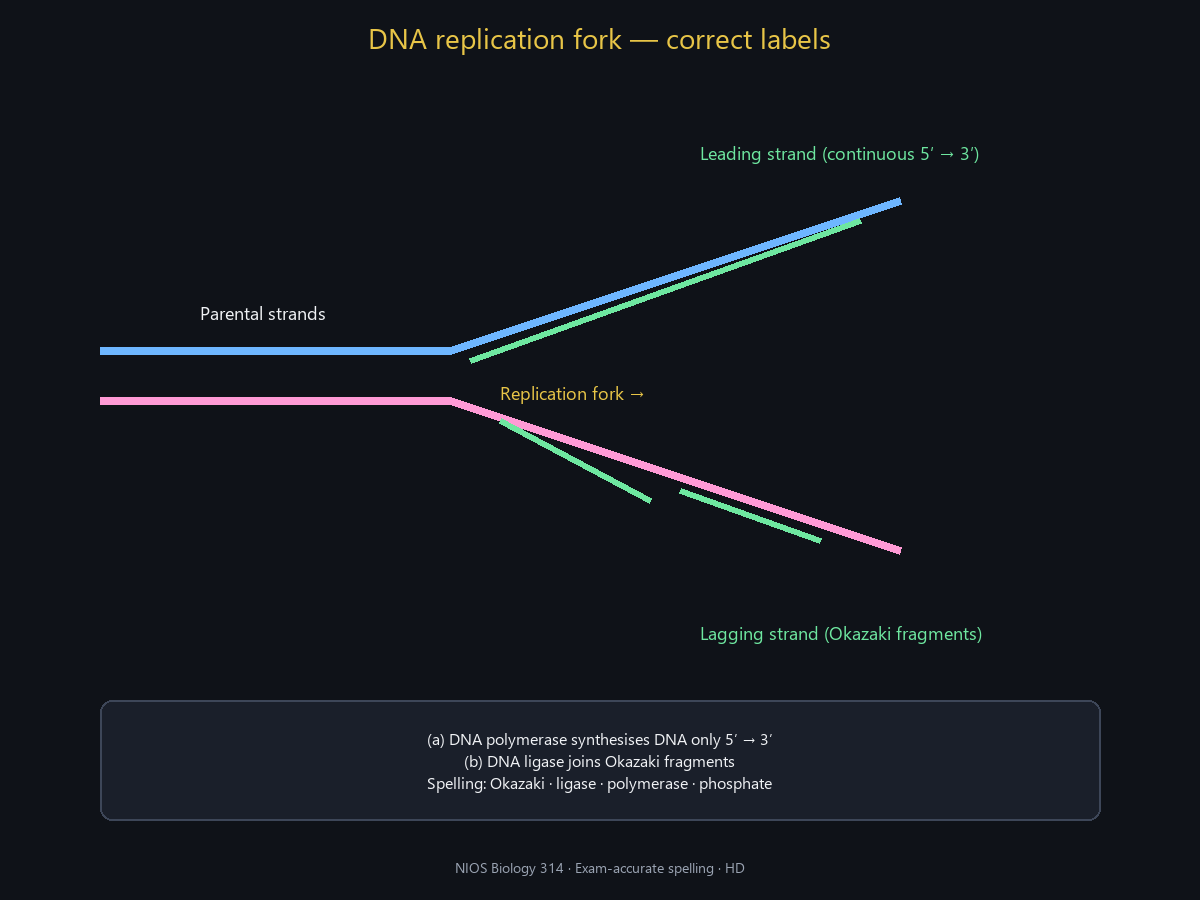
Why it clicks: Always 5′→3′; lagging strand needs ligase glue.
Q5. (I) Observe the Lac operon diagram given below and answer the questions that follows. (a) Which substance acts as inducer in this operon? (b) Where does RNA polymerase bind to initiate transcription? (c) What are the genes z, y, a called as?
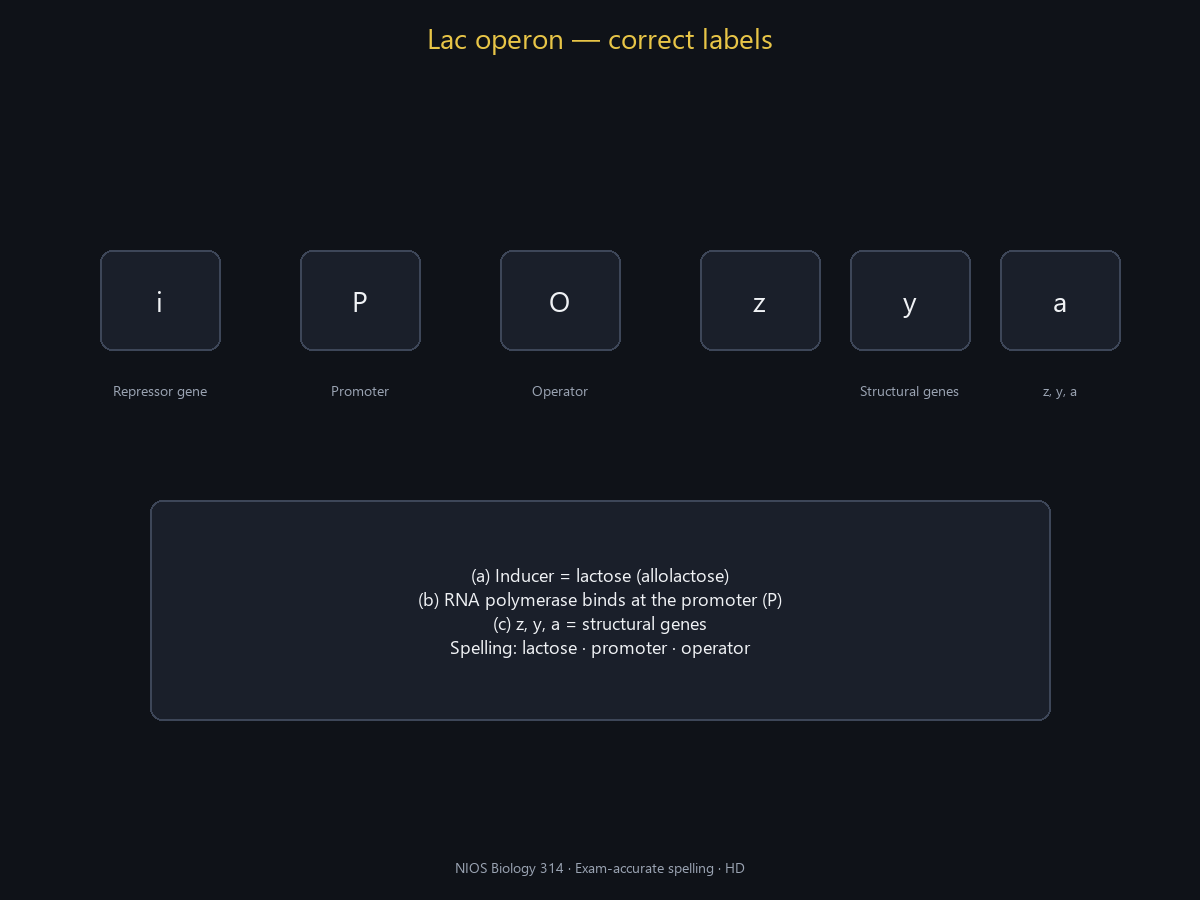
Why it clicks: Lac operon: lactose turns on structural genes via operator control.
Q6. (a) Correct the diagram of Central dogma given below DNA Transcription RNA Replication Protein (ii)Where in a eukaryotic cell, Transcription, Replication and translation occur?
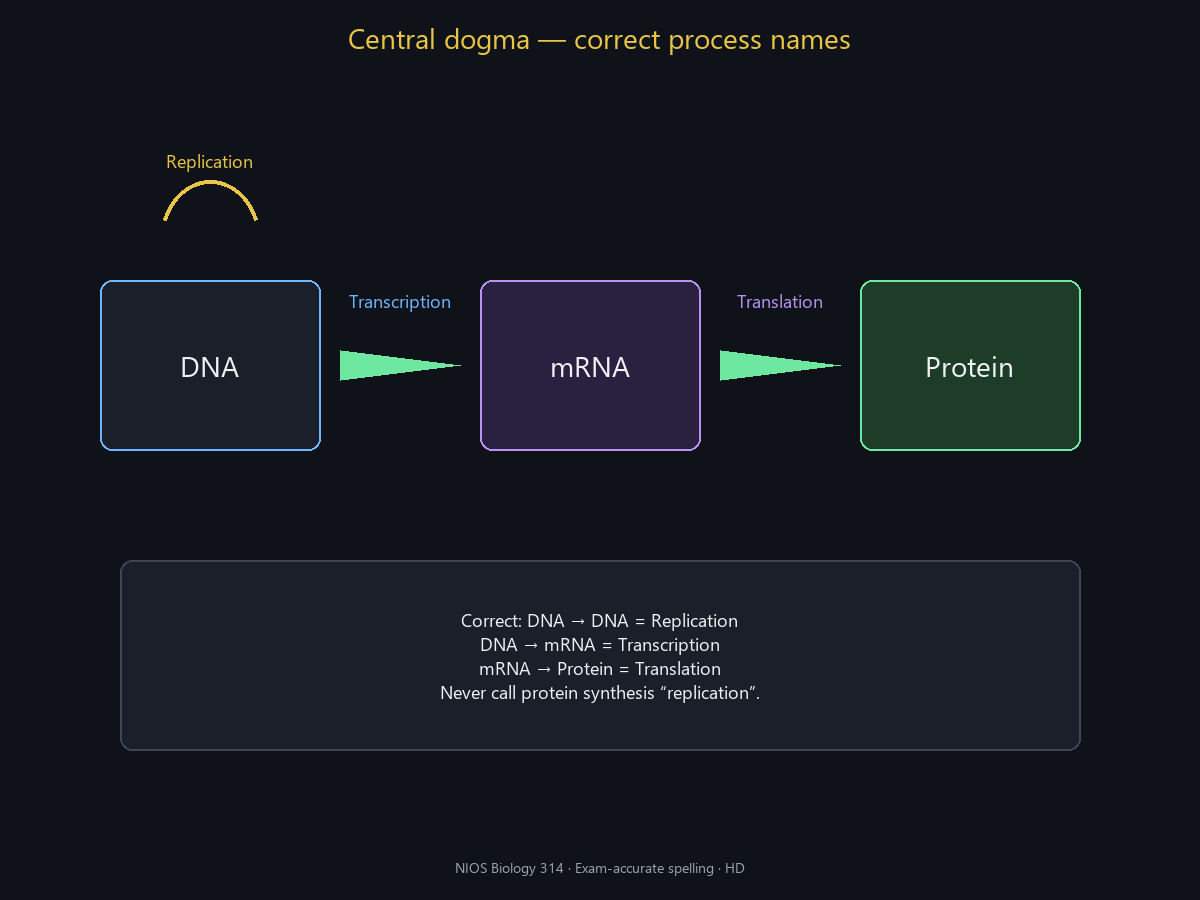
Why it clicks: Do not write RNA → protein as replication.
Q7. Desire for male offspring a) DNA Transcription mRNA Translation Protein Transcription and replication inside the nucleus, translation in the ribosome in the cytoplasm
Why it clicks: Use the corrected dogma lines as the answer.
L25 — Principles of Ecology 10
Q1. Which of the following makes up the final trophic level in a food chain?
Why it clicks: Decomposers form the final trophic role recycling dead matter.
Q2. Fill in the blanks (attempt any two from A to D): 2 The flowchart given below is a diagrammatic representation of trophic levels in a A in an ecosystem: Fourth trophic level Third trophic level (Carnivore) Second trophic level First trophic level [a WmZ [aE (A go D
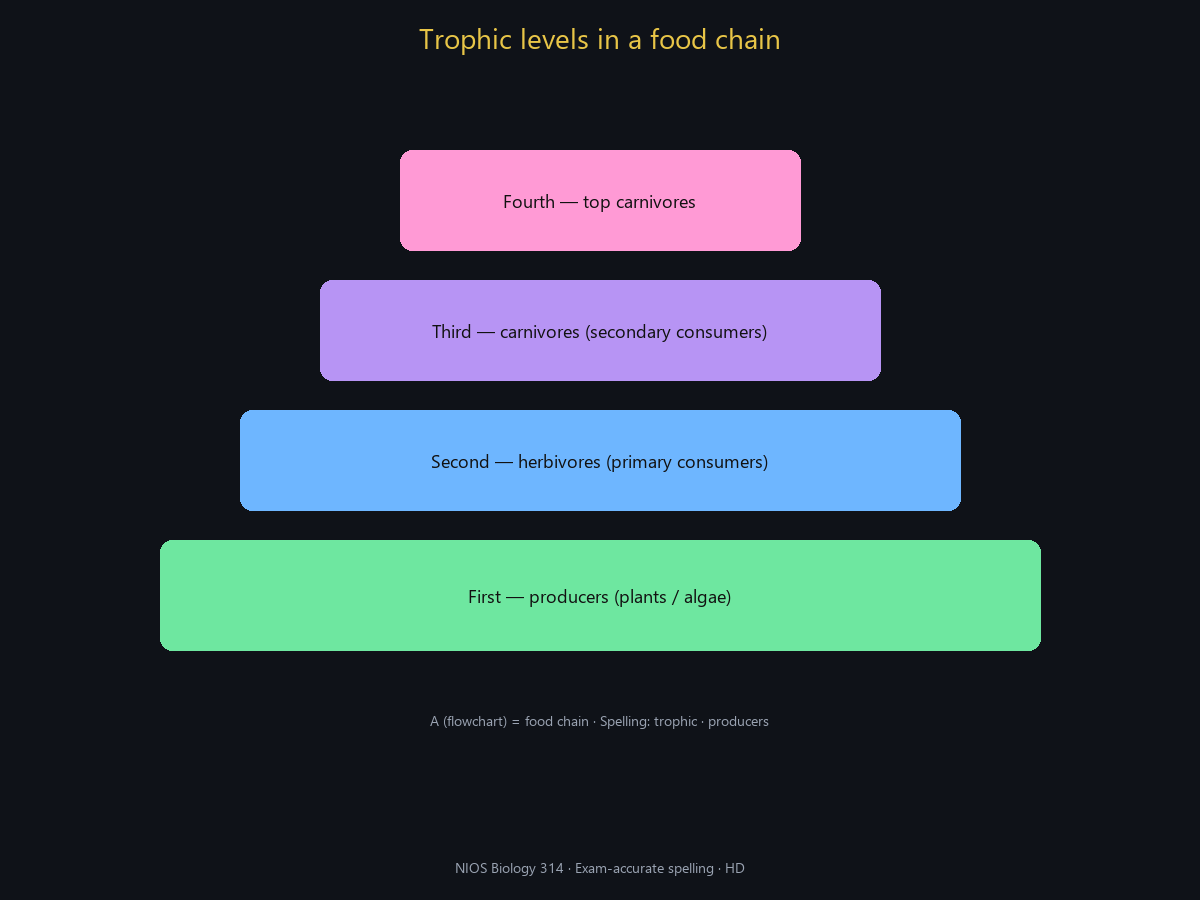
Why it clicks: Base producers, then consumers up the chain.
Q3. Fill in the blanks (attempt any two from A to D): 2 A and B are two adaptations to promote cross-pollination in flowers; while C and D are two devices to ensure self-pollination. [a WmZ [aE (A go D
Why it clicks: Open flowers that force outcrossing vs closed flowers that self.
Q4. Define the following terms: 2 (a) Population (b) Adaptation
Why it clicks: Population = same species group; adaptation = useful inherited trait.
Q5. Which one of the following adaptations is seen in plants to promot e self-pollination?
Why it clicks: Closed flowers force self-pollination. Dichogamy/unisexuality/self-sterility promote cross-pollination.
Q6. In the given food chain identify the trophic level of frog
Why it clicks: Typical chain grass → insect → frog → snake: frog is secondary consumer = third trophic level.
Q7. The biological community in an area or ecosystem is a complex networ k of interactions. Interactions may be of various types. In commensalism type
Why it clicks: + / 0 interaction.
Q8. Aquatic ecosystems are classified on the basis of salinity into tw o types-Fresh water and Marine. The common flora and fauna found in fresh water bodies like ri vers, lake include phytoplanktons, water hyacinth, water lily and zooplankton, cra b and fishes respectively. Wet lands are between aquatic and terrestrial ecosystem. They show an edge effect and form an ecotone. (a) What is the study of fresh water ecosystem known as? (b) Define ecotone
Why it clicks: Wetland edge = classic ecotone example.
Q9. Build a food chain showing one producer and three consumers. What will be the trophic level of the final consumer of this food chain?
Why it clicks: Count levels from producer = 1.
Q10. Genes → cells →organ → organism → population Species → community → Ecosystem →biome →Biosphere 35 Defence against microorganisms such as virus and bacteria; recognition and destruction of mutant cells
Why it clicks: Hierarchy from molecule to whole Earth living system.
L28 — Nutrition and Health 10
Q1. Excessive intake of iron in diet causes
Why it clicks: Iron overload → hemosiderosis. Anaemia = iron lack; scurvy = vitamin C lack.
Q2. What are vitamins? Vitamins are grouped into two classes. Name them and give one example of each
Why it clicks: Fat vs water solubility decides storage and overdose risk.
Q3. Given below is the list of vitamins with their functions. Choose the incorrect pairs of vitamins with reference to their function. (a) Vitamin A: Maintenance of vision (b) Vitamin C: Formation of blood (c) Vitamin D: Healthy bones and teeth (d) Vitamin K: antioxidant: ageing vitamin
Why it clicks: Eliminate the mismatched vitamin–disease pair.
Q4. A group of food items is given in the table. Categorize them into energy providing foods and body building foods. Cereals, legumes, meat, sugar, oil, fish, egg, jaggery Cereals, legumes, meat, sugar, oil, fish, egg, jaggery
Why it clicks: Three food-function groups from NIOS nutrition.
Q5. (a) Define obesity. 3 (b) List any two causes of obesity. (c) State two Harmful effects of obesity
Why it clicks: Too many calories in, too little out.
Q6. Deficiency in minerals in our food may lead to deficiency diseases. Nam e which mineral deficiency may lead to the following: (a) Anaemia (b) Osteomalacia (c) Goitre
Why it clicks: Mineral map: Fe blood, I thyroid, Ca bones.
Q7. (II) Among the food constituents the richest source of energy and also excess of which causes obesity is A. Proteins B. Carbohydrates C. Fats D. Vitamins 12 Suggest a permanent method of family planning to a couple who already have two children. A. Copper. T B. Vasectomy D. Condoms. 13 (I) My nephew reads a book aloud clearly during the day but cannot see the words on the same page at night. He has been diagnosed with a deficiency of vitamin
Why it clicks: Fat = 9 kcal/g vs carb/protein ~4.
Q8. (II) Marasmus and Kwashiorkar occur in case of A. Under nutrition B. Malnutrition C. Overnutrition D. Balanced diet 14 The antibiotic obtained from Streptomyces aureofaciens is A. streptomycin. B. cycloheximide. C. chloramphenicol. D. chlorotetracycline. 15 Which bacterium helps to set milk into yoghurt? A. Lactobacillus B. Preumococcus C. Azotobacter D. Mycobacterium
Why it clicks: Lactic acid bacteria set milk to curd/yoghurt.
Q9. Given below are the names of some genetic diseases. Write down one symptom for any two disease a) Haemophilia b) Colour blindedness c) Kline felter syndrome d) Sickle cell anemia
Why it clicks: One clear symptom per disease name.
Q10. (I) A large number of people in our country suffer from malnutrition. Malnutrition affects the health of the children adversely as it results in physical and mental retardation. Generally the growing children suffer from protein energy malnutrition. A number of children in the age group of 1-5 years suffer from this disease. i. Define Disease ii. Write any two common diseases of PEM seen in our country
Why it clicks: Wrong nutrition harms health—both too little and too much.
L30 — Biotechnology 8
Q1. A broad-spectrum antibiotic, used against pathogenic bacteria, is
Why it clicks: Broad-spectrum hits many bacterial types.
Q2. Which of the following bacteria helps to set milk into yoghurt?
Why it clicks: Lactic acid bacteria set milk to curd/yoghurt.
Q3. The disease for which bio-engineered vaccine has already been developed is
Why it clicks: Recombinant hepatitis B vaccine is textbook example.
Q4. Biotechnology helps in synthesizing enzymes from cloned genes. Your friend wants to manufacture meat tenderisers. Which enzyme would you recommend to him?
Why it clicks: Bacteria as enzyme factories via recombinant DNA.
Q5. Which one of the following is not the step of microinjection process in biotechnology?
Why it clicks: Microinjection = DNA into animal egg pronucleus.
Q6. (a) Following is the representation of how a plasmid isolated from bac terium that causes galls in several plants is used to produce transgenic plants. (i) Name the bacterium that causes galls in plants. (ii) Name the plasmid used to transmit the desired genes
Why it clicks: Natural plant genetic engineer = Agrobacterium Ti plasmid.
Q7. (b) Given below is the picture of a normal mouse
Why it clicks: Transgene changes phenotype (size) vs control mouse.
Q8. Fermentation has a number of industrial applications, like A. In bakeries for preparing bread, cakes and biscuits. B. In breweries for preparing wine and other alcoholic drinks. C. In producing vinegar and in the tanning of leather. D. All the above. Which of the following cells is involved in cell-mediated immunity? (a) Leukaemia (b) T-cells (c) Mast cells (d) Thrombocytes
Why it clicks: Yeast/bacterial fermentation = industry workhorse.
L31 — Immunobiology: An Introduction 8
Q1. The largest lymphoid organ in the human body is
Why it clicks: Spleen is the largest lymphoid organ.
Q2. Write the main functions of B-cells and T-cells in the immune system
Why it clicks: B = antibodies; T = help/kill/regulate.
Q3. Draw a diagrammatic structure of an antibody, and label the specific antigen-binding site
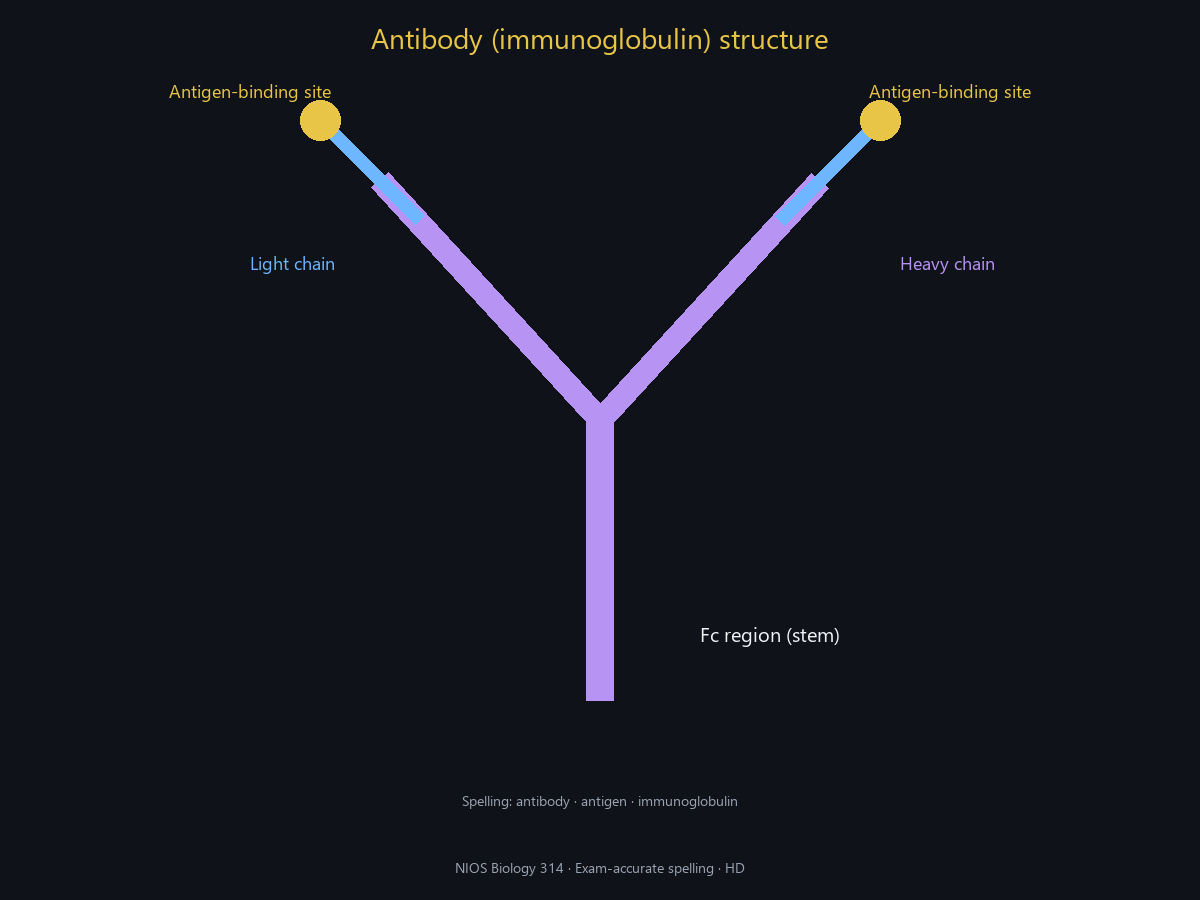
Why it clicks: Two sticky hands (bind antigen) + one handle (Fc).
Q4. (a) Write the names of any two immunodeficiency disorders and give the cause of the disease. (b) Name the two major types of lymphocytes. State where they develop and mature. (H)
Why it clicks: Primary genetic vs acquired viral immunodeficiency.
Q5. Name the cells that are seen in the lymph nodes and attack bacteria
Why it clicks: Lymph nodes are packed with lymphocytes (B and T cells) that target pathogens (L15/L31). Erythrocytes carry O₂; they do not attack bacteria.
Q6. Identify the immunoglobulin found in highest concentration in our body
Why it clicks: IgG is most abundant antibody class.
Q7. Fill in the spaces A and B in the sentences given below: 2 (a) Cell mediated immune response is mediated by (b) Humoral immune responses is mediated by B
Why it clicks: T cells cell-mediated; B cells antibodies.
Q8. (a) What are the two specific immune responses we develop in our body when we are infected?
Why it clicks: Two arms of adaptive immunity.